
One common weakness of managers is their inability to execute – an inability to get things done. Since a manager works through his or her team, getting things done is the only way to succeed as a manager. You can’t do it all yourself.
Surprisingly, this weakness affects even managers with many years of experience. But it is especially common with newer managers. This is because before becoming managers, they were used to getting things done by themselves as individual contributors. Getting things done through others is a lot more challenging.
When it comes to the inability to execute, there are two common causes: some managers over-manage (“micro-manage”) and others do the opposite – they under-manage.
Managing execution effectively is critical to your team’s success and, ultimately, to your success. The good news? You can learn to become effective at managing execution. Let’s look at how:
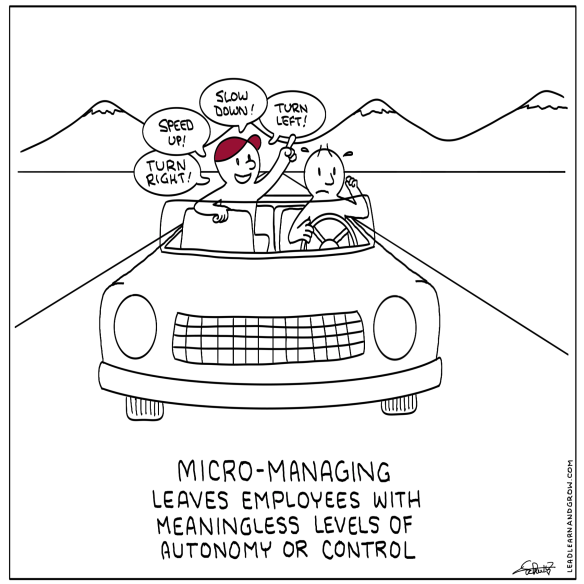
Micro-managing is essentially over-managing employees. This is when the manager leaves employees without any meaningful level of autonomy or control. The choices the employee makes are either just cosmetic or the manager will interfere with the choices after they are made.
This leaves the employee frustrated and disengaged. Worse, it wastes the talents of the employee. The manager is basically doing all of the important decision making. What a poor use of time and energy!
Why do managers micro-manage? The most common reason is that they don’t trust their employees to make decisions. They are not willing to take the risk that, sometimes, an employee will make the wrong decision.
The reason that micro-management leads to failure to execute, is that the manager is so involved in the details, that there isn’t enough time in the day to ensure everything is getting done. This is where the expression “Not seeing the forest for the trees” comes from. You are so busy with the details that you can’t see the big picture – and managing execution requires seeing the whole forest!
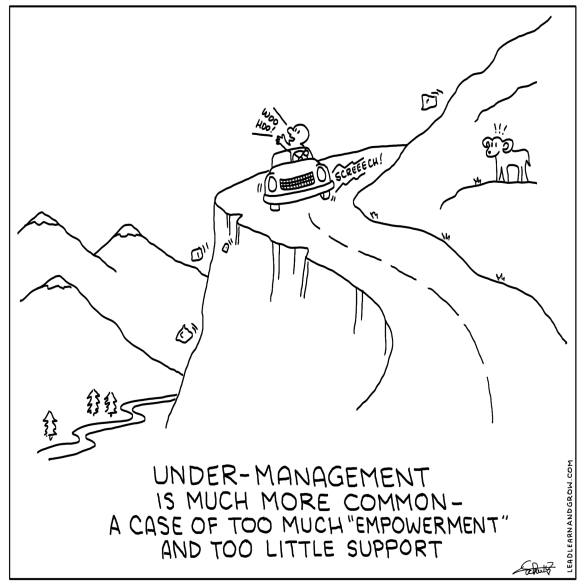
The other extreme is under-management. This is the most common reason for lack of execution. Essentially, it is giving the employee too much autonomy and decision-making freedom without the necessary support.
Unfortunately, this happens with the best of intentions – the manager believes he or she is “empowering” their employees. But empowerment is only part of the equation. You also have to consider whether the person is ready for the level of responsibility you give them. Empowerment without capability leads to failure.
Think about it this way: most countries have minimum ages to receive a driver’s license and you have to complete instruction and pass tests to show you are ready. When a manager empowers an employee, it needs to be the right level of empowerment for them with all the right capability and resources.
Under-management leaves employees unable to succeed. They may feel excited by the amount of freedom they are being given – but more often, they are worried, uncertain and frustrated because they aren’t sure where they are going and how to get there.
The reason under-management leads to inability to execute is that the manager is so focused on the forest that he or she forgets to zoom in and see the trees. When she finally does, at the end of the month, the quarter or the year, she is shocked to discover that the objectives have not been reached!
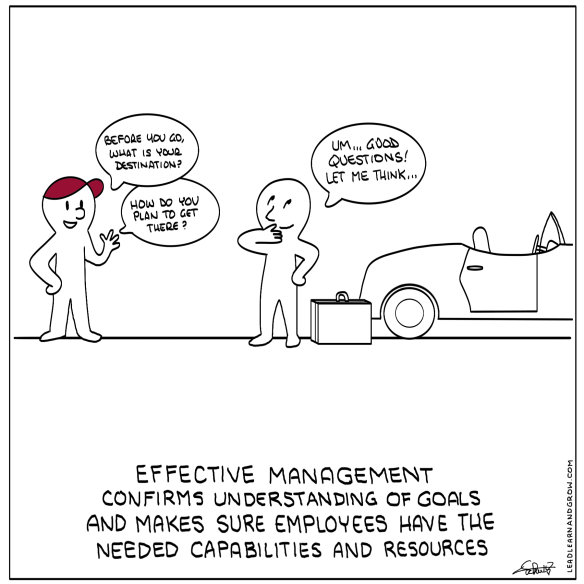
So if over-management and under-management both lead to inability to execute, what is the right solution? Just like in the fairy tale Goldilocks and Three Bears, the middle approach – effective management – is the right one.
Effective management means you do four things:
- Set clear objectives – when you set a goal or objective, describe it in clear detail (think SMART goals – specific, measurable, achievable, resources and time frame) and check that the employee understands exactly what your expectations are.
- Make sure the employee has the capabilities and resources – ask how the employee is planning to achieve the objective and what resources he will need. You don’t need every detail – no micro-managing – but you do need confidence that he has a workable idea how to reach the objective.
- Check progress early – before the employee gets too far on their journey, do a quick check to see what progress is being made. For example, if you give them a week to reach a deadline, check in quickly the following day just to see how they are doing. This way, you spot obstacles or confusion early – not on the day of the deadline.
- Monitor progress regularly – for larger objectives and longer-term goals, set regular meetings to review progress. If there are obstacles, use the meeting to confirm that the employee knows how to overcome the obstacles. Do not let the meeting end without a plan and a high degree of confidence that the plan will be implemented.
With these four steps, you are providing the right balance of managing. If the employee has a clear understanding of the objectives, workable ideas to reach the objectives, and is making progress, you can manage a little less closely. If the employee is struggling or is less experienced in this area, you can manage a little more closely until he or she gets comfortable.
Of course, once the objective is reached, take the time to reflect with the employee: what did they learn? What went well? What would they do differently next time? And what could you do more effectively next time as their manager to help them?
By practicing effective management – and avoiding the extremes of micro-management and under-management – you will become much more effective at managing execution and getting things done through your people.
Let me know what you think – your comments and feedback are always welcome.
 Lead Learn and Grow