
This is the second chapter in my virtual book, “On Leadership“.
This chapter is about building your leadership ability. In the previous chapter, we introduced the difference between managing and leading. You will recall that managing is a business skill and leading is a human skill. If you are going to be a leader, who is the first person you need to lead? Of course, the answer is, yourself!
This may sound odd. After all, we usually think a leader leads other people. That is true, but the first person a leader leads, is him or herself. In order to lead yourself, you need to first know yourself.
What does it mean to know yourself and why is it important?
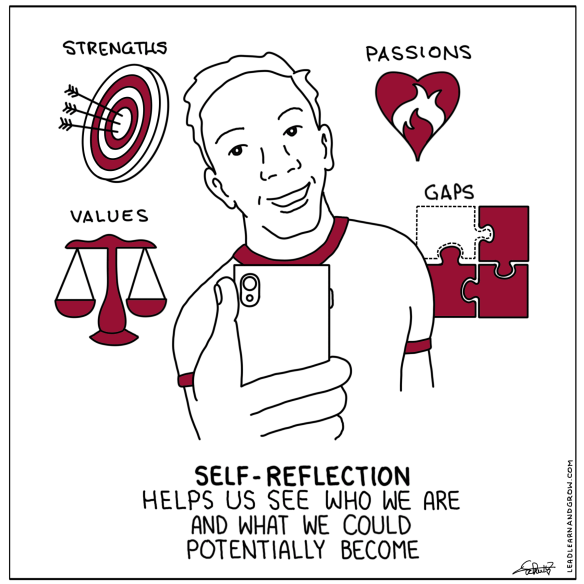
Each of us has different strengths and abilities. We also have different interests and values. We are most effective when we have a clear picture of who we are, what we value, what we are good at and what we enjoy doing. And, of course, we need to know the opposites, too: who we are not, what we do not value, what we are not particularly good at and what we do not enjoy doing.
Let’s look at two practical examples of this, one from outside the workplace and one from within the workplace:
John grew up in a peer group that was mostly from well-off families. While John’s family was modestly middle-class, he felt a lot of pressure from his peers to dress in the latest designer clothes, have the newest smartphone, and drive a fancy car. To have these things, he had to work very hard, missing birthdays and other special events of family members and friends. He also ended up taking on quite a bit of debt which he could not afford. Eventually, he worked himself into exhaustion and ended up in the hospital.
John’s aunt, someone who had treated him just as her own son when he was a boy, visited him in the hospital and asked why he was working so hard. At first, John did not have an answer. His aunt patiently asked about the many nice things he had and how he felt about having them. She asked without judgement, encouraging John to think about whether these material things were worth risking his health and missing out on spending time with his family and loved ones.
With his aunt’s gentle but powerful questions, John came to realize that all of these material things were not bringing him any happiness. And, in fact, they were causing him great suffering. He came to see that his actions were not aligned with his values: what he was doing (working to the point of exhaustion, missing special moments with loved ones, and digging himself into a deep hole of debt) were not fulfilling what was most important to him (health, spending time with loved ones, and enjoying the life he has). Realizing this allowed John to start making different decisions and, ultimately, to make choices that left him happier and more fulfilled.
The second example is from the workplace:
Anh graduated with honors in engineering and quickly found a job at a prestigious company. For the first year, Anh worked on individual assignments. She did not see how her work really made a difference and she had little interaction with her colleagues. Even though her parents were proud of her, Anh dreaded going into the office each morning and each afternoon, could not wait to leave. She wondered if this was what the next several decades of work would be like.
One day, Anh’s manager placed her on a short-term project working with team members from other departments to address a serious challenge that was affecting the company. Anh felt a new level of energy. She enjoyed learning about other parts of the company and how the project team’s work impacted the whole organization. Finally, it felt like she was doing something meaningful and she was not stuck working alone!
After the project was over, Anh’s manager asked what she had learned from the assignment. At first she hesitated to answer directly, but finally shared that she missed working with others and was energized by being part of something bigger. Her boss agreed that this was one of Anh’s strengths and said he would move her to work within a team. He also agreed to take more time explaining how her work related to the organization’s larger needs.
 These two examples show how knowing yourself can help you feel more fulfilled and even happier in life, both inside and outside work. They are big-impact examples, but you can probably think of many everyday examples of how being more self-aware has helped you feel more fulfilled and happier.
What are some easy ways to get to know yourself better? There are many ways to deepen your self-awareness. The easiest is to set aside some time to consider the following questions. Write your answers and spend some time reflecting on what they tell you about yourself.
- What are the ten most important things to me in life? Rank them in order from most important to least important.
- What three words or short phrases best describe me?
- What is my biggest strength?
- What is my biggest weakness?
- What do I fear the most?
- What type of activities in the workplace make it feel like the time just flies by? Which activities give me the opposite feeling?
- What situations make me feel terrible, and what do they have in common?
- How do I prefer to interact with others?
- What motivates me to make progress?
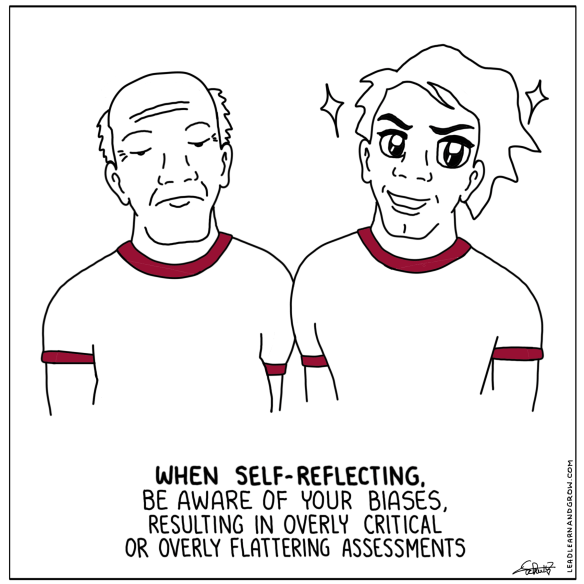
One warning: when self-reflecting, be aware of your biases. Some of us have a negative bias, resulting in us being overly self-critical. Others of us have a positive bias, resulting in a too-flattering self-portrait. And most of us have a bit of both biases, which can distort the picture. The easiest way to account for biases is to seek inputs from others, but even if you don’t feel comfortably doing that (yet!) please make every effort to assess yourself as accurately as possible.
Let me give you a quick example of how your answers to the above questions can deepen your self-awareness. One of my biggest strengths (question 3) is that I am very detail-oriented. Knowing this about myself means that I can be a great person to proofread documents, scrutinize implementation plans and critique written proposals. Those are the “pros” about this strength.
But I can also ask myself, when does this strength turn into a “con” or a liability? Sometimes I frustrate my colleagues by focusing on nit-picky details when all they are looking for is some general feedback. And sometimes I become so detail-oriented, that I risk missing important deadlines.
Knowing your strengths gives you insight into how to play to those strengths, but also how to watch out for “de-railers” or traits that can unexpectedly knock you off your path. This is true for all these self-awareness questions. Your answers to these questions will help you recognize some truths about yourself.
When we are working and living in a way that aligns with these truths, our life tends to go smoother. And when we are working and living in a way that goes against these truths, challenges arise.
Over the next week, set aside some time to do this self-awareness reflection. See what you can learn from it and start looking at how your life aligns or conflicts with your truth.
Interested to further increase your self-awareness? Here are four ways:
- Ask people who know you to answer the questions above about you, from their perspective. For example, ask a trusted colleague, a close friend and your spouse for their answers and then compare how you answered from your own perspective. Think about why they have a similar or a different perspective about you and what you can learn from this.
- Discover your DISC profile. DISC is a communications preferences assessment and can be helpful in recognizing how you prefer to interact and communicate with others. The free assessment and report on the Tony Robbins website provides helpful information. There are many other website that offer free or low-cost DISC assessments, too.
- Meditate or exercise regularly. These types of activities let you get in touch with your body, especially your breathing. They help you let go of what you are thinking and “tune in” to your deeper self.
- Keep a written journal. Regular journaling, recording your activities, thoughts and feelings on a daily or weekly basis, helps you pause and reflect, recognize patterns and learn more about yourself.
As always, we welcome your input and feedback: leave your comments below or drop us a message.
 Lead Learn and Grow