Unknown's avatar

About christao408

An expat American who moved to Bangkok in 2005 with his partner (now husband). Life is a grand adventure and each experience is worth having if for no other reason than to remind us that we are alive.

Sitting at the Big Kids’ Table: Tips to Develop Your Executive Presence

Executive presence is more than just looking the part—it’s about earning trust, projecting confidence, and influencing others in ways that drive results. Whether in smaller, local businesses or in multinational companies, executive presence helps leaders build credibility across cultures and teams. It’s a blend of how you communicate, the clarity of your thinking, and the respect you command. Developing it isn’t reserved for senior leaders; it’s a skill anyone can build, especially if you aspire to have a seat at the table where decisions are made.

Here are five ways to enhance your executive presence:

  1. Talk Business Impact: When contributing in meetings or discussions, frame your points around how they impact the business. Leaders at every level value insights tied to results, not just the process
  2. Observe and Learn: Pay close attention to leaders who are effective in different settings—how they communicate, how they handle tough questions, and how they project confidence. Reflect on what you can apply in your own style
  3. Build Your Point of View: Executive presence grows when you’re seen as thoughtful and decisive. Take time to form opinions by understanding data, trends, and stakeholder perspectives. Then, share your insights clearly
  4. Speak Up: Silence can be mistaken for disengagement. Even if it’s just to ask a question or summarize a discussion point, your voice signals confidence and active participation
  5. Stay Composed: Presence is as much about emotional control as it is about words. Practice staying calm under pressure. A steady demeanor earns respect in moments of challenge

Developing executive presence isn’t about pretending to be someone you’re not. It’s about growing into the kind of leader people naturally turn to. Start small, practice regularly, and watch your influence grow.

Chapter 5 – Focusing on what you can do

This is the fifth chapter of my virtual book, “On Leadership“.

In the previous chapter, we looked at how you can build resilience and cultivate a “growth mindset”. These are skills you can develop to become more effective at leading yourself. In this chapter, we will use the “circle of influence” tool and learn how we can empower ourselves by focusing our time, attention and energy on what we can do rather than what we cannot do

This concept of the “circle of influence” dates back from the book “The Seven Habits of Highly Effective People” by Stephen Covey. While it was published originally in 1989, it remains one of the most influential books about personal effectiveness and is well worth reading. Let me share the concept with you here, in case you have never heard of it or would benefit from a refresher:

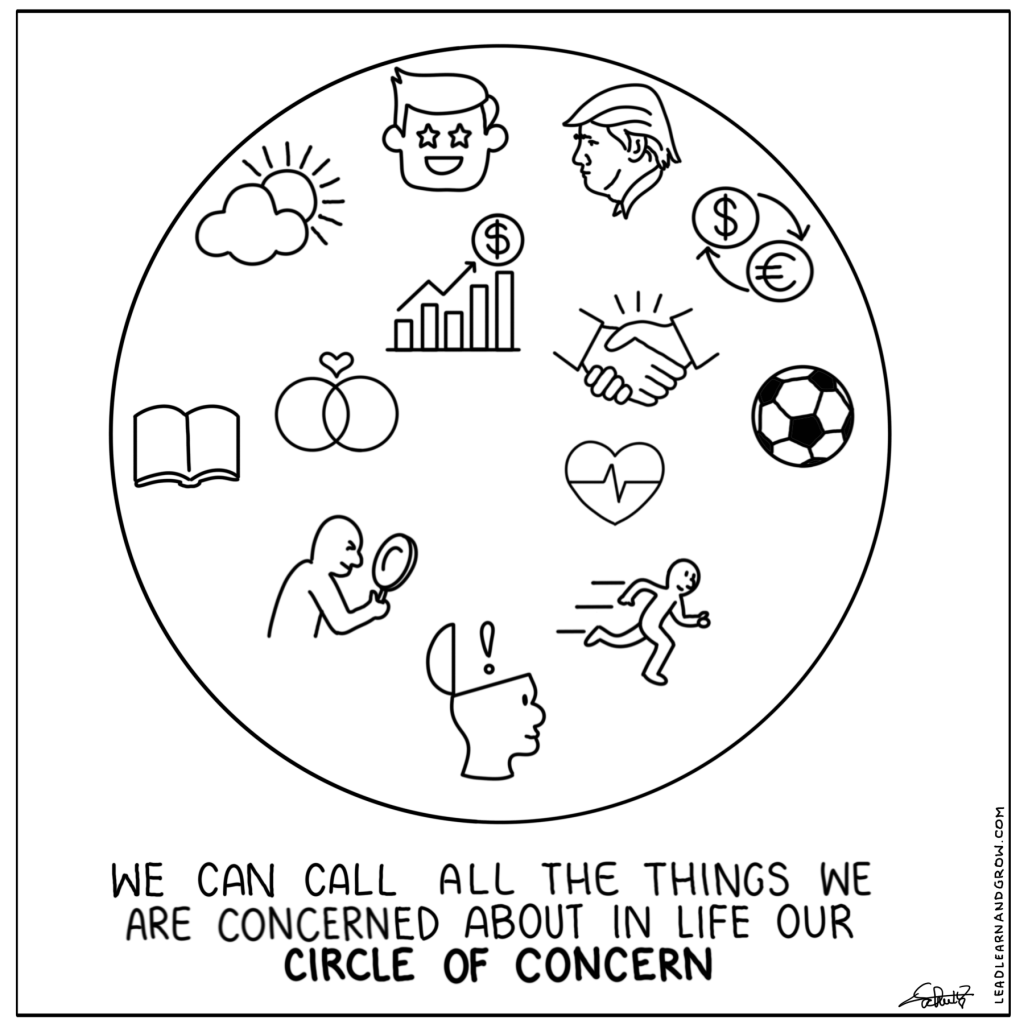
Imagine all the things in life that you are concerned about: these may be things such as your work, your family, the weather, your favorite sports team, your health, and may other things. All of these things can be put in a circle we can call the “circle of concern”. This circle includes things that you can directly control, things you can influence, and things you can do nothing about.

Schultz - circle of influence

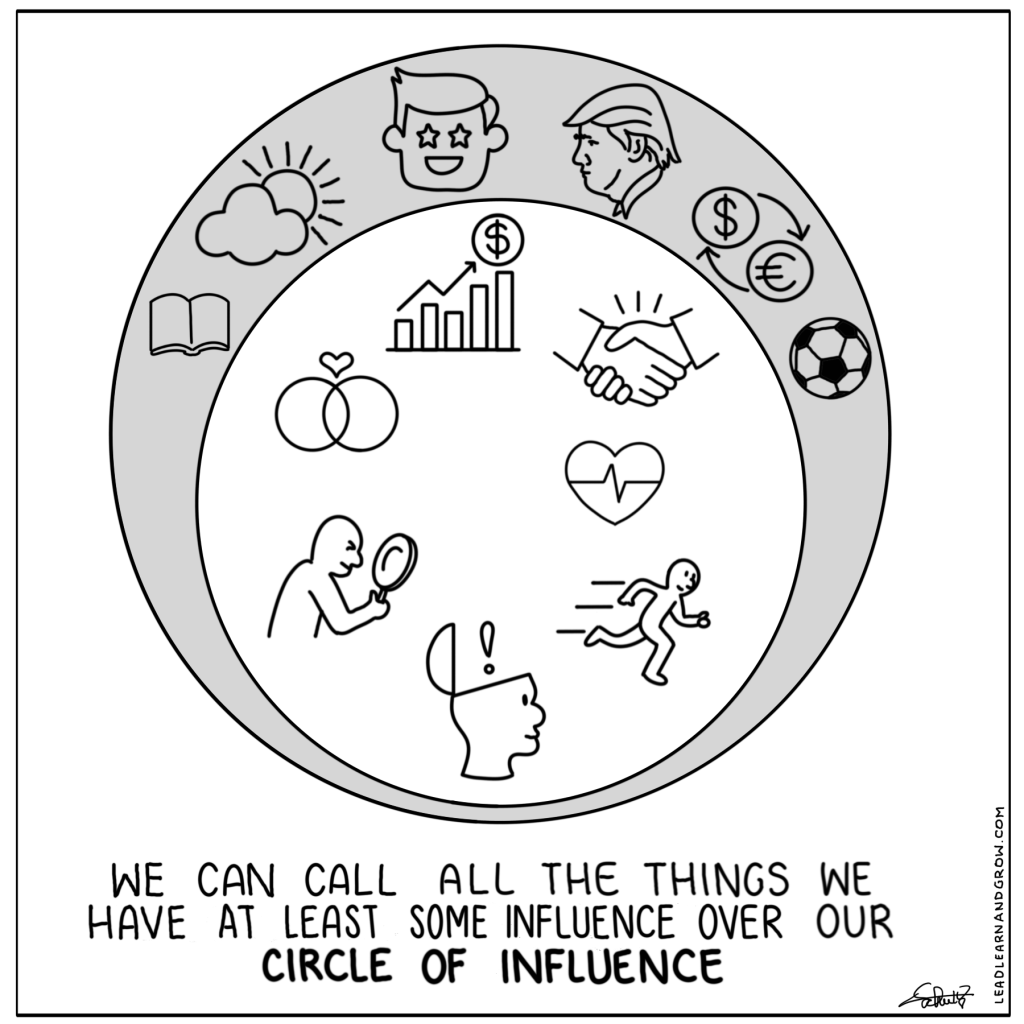
We can take everything in the circle of concern and sort them into two categories: things over which we can exert at least some influence or control, and those things over which we can exert no influence or control.

Some examples of things we cannot influence at all include the weather, the performance of our favorite sports team, exchange rates, the moves by our competitors and most politics – unless you decide to run for office! These things remain in the “circle of concern”.

One thing that ALWAYS remains in the circle of concern are things that happened in the past. We spend so much time and energy replaying things that already happened, telling ourselves how unfair such-and-such a situation was, regretting decisions we made, complaining about past injustices. And we can do nothing about these things, because they have already happened.

Schultz - cir of influence

Some examples of things we can influence, at least to some degree, are the actions of our friends, family members and colleagues. We can influence the work we do, our own feelings and, of course, our health and wellness through choices we make about diet, exercise and getting enough rest. These things can be put in a circle called the “circle of influence”, which sits inside the larger circle of concern.

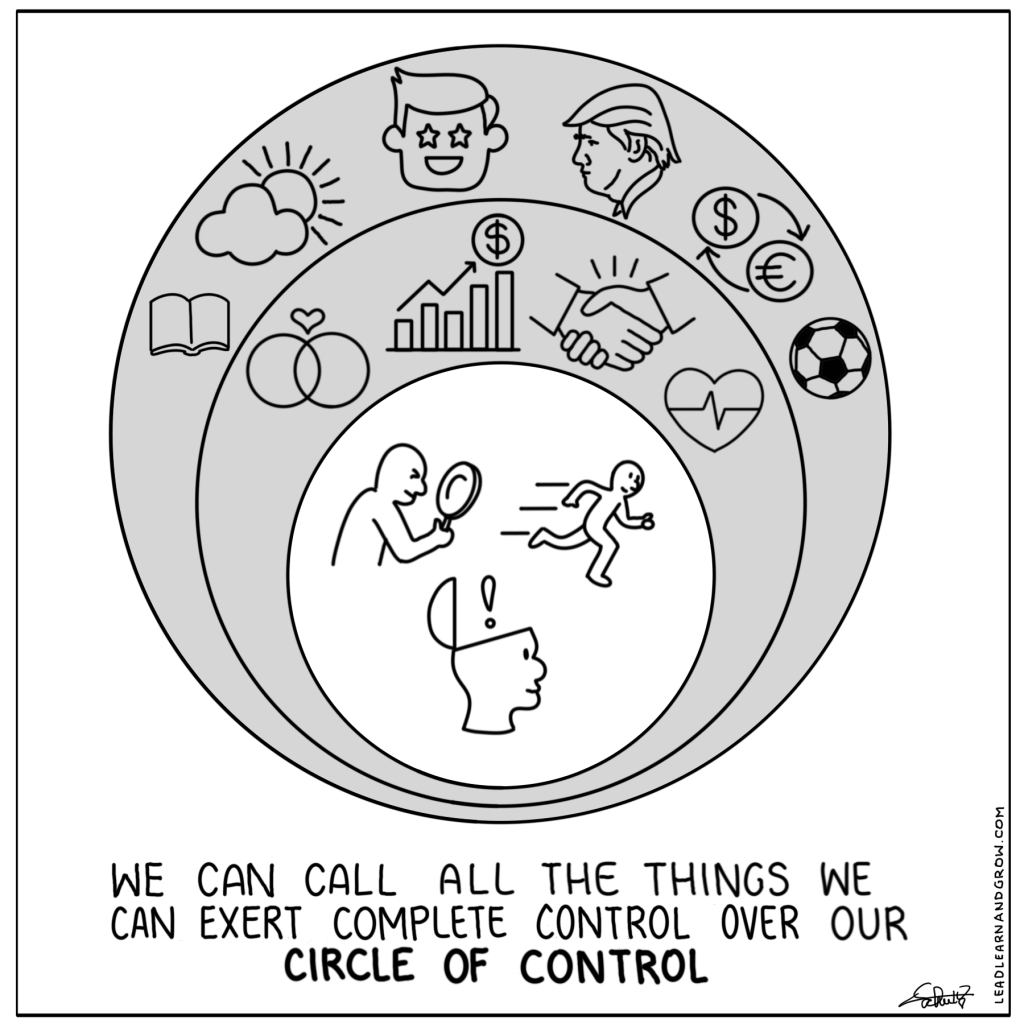
The things in the “circle of influence” can be further sorted into two categories: things over which I can exert complete control, and all the remaining things which I can only influence but cannot completely control.

Schultz - circle of control

There are many things in life which we can influence to a greater or lesser degree, but there are only three things over which we can exert complete control:

  • Our focus – we can choose what to focus our attention, time and energy on. Even if we get distracted, we can always choose to refocus on what is important to us.
  • Our interpretation – while it is not always easy (and we will discuss it further in a future chapter), you alone can decide whether the proverbial glass is half full or half empty.
  • Our actions – we may feel obligated to act in certain ways, but in reality as a human being, we are fully in control of the next step or action we take. Even with a gun pointed at us, we can choose whether to resist or comply.

We can place the things we can completely control within a circle called the “circle of control”, which sits inside the larger circle of influence, which sits inside the larger circle of concern.

And here is the power of the “circle of influence” tool:

Which circle offers us the best return on investment on our energy spent? In other words, if we are going to use our emotions, our time, our thoughts and our efforts, which circle is the most worthwhile to use them on?

The circle of control offers the best return on investment, because 100% of our energy delivers a result.

Let’s turn this on its head and look at it in another, simpler way:

Schultz - concern

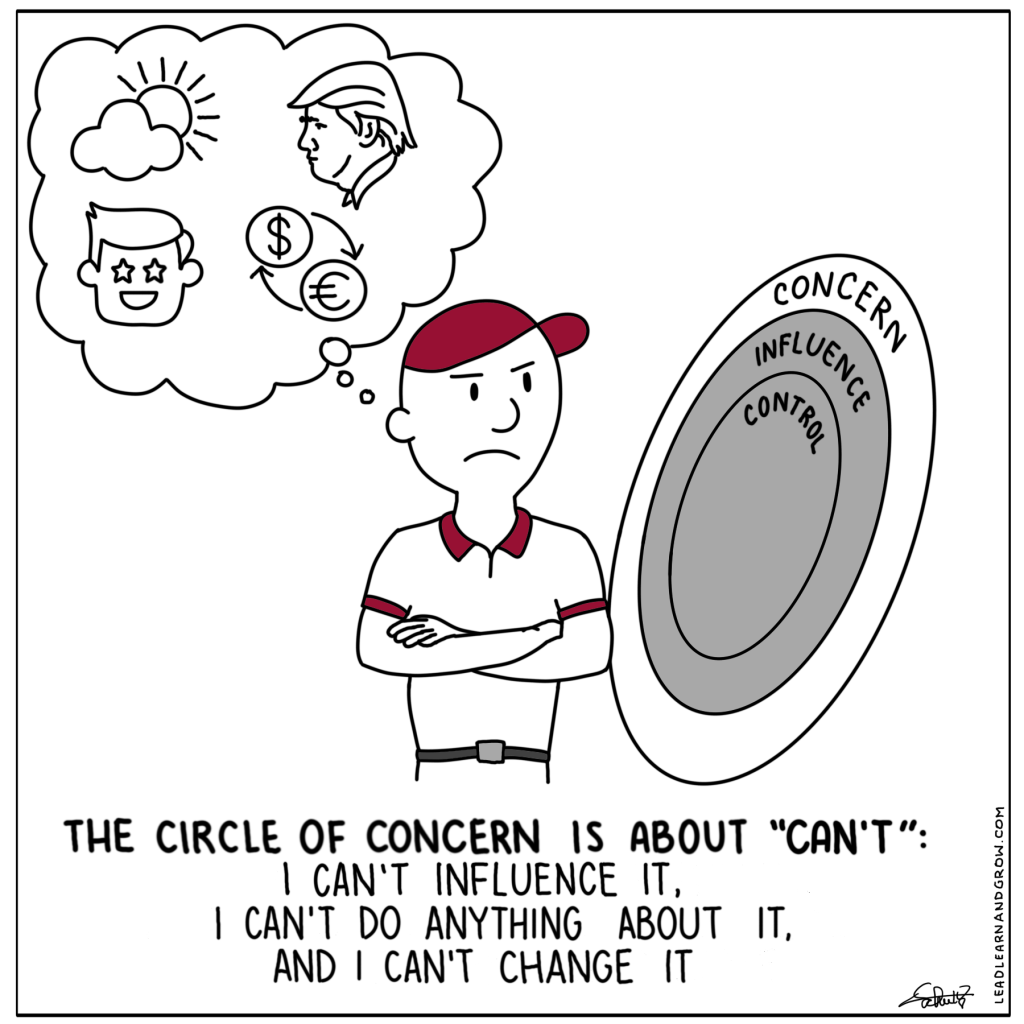
The circle of concern is the circle of “can’t”: I can’t influence it, I can’t do anything about it, I can’t change it.

Schultz - control

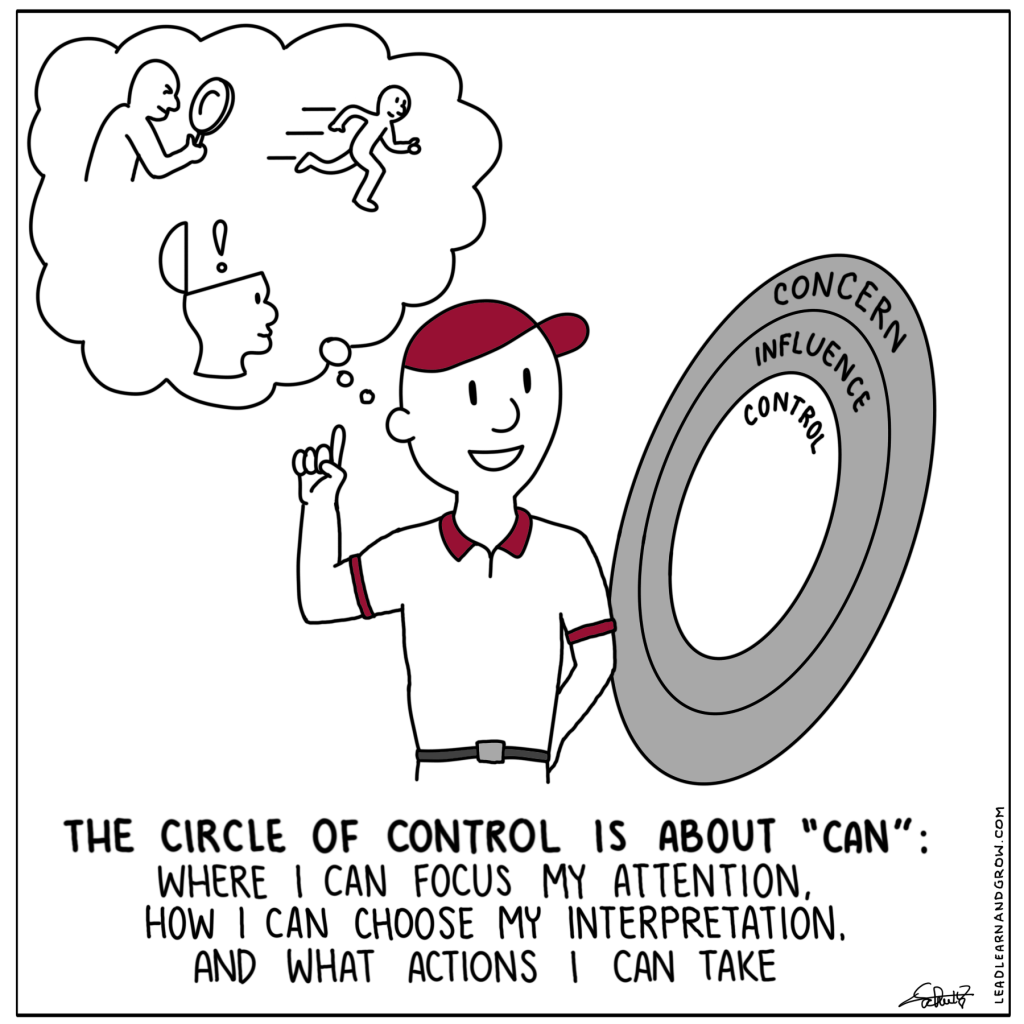
The circle of control is the circle of “can”. I can choose what to focus on. I can choose how to interpret the situation. I can choose how to act.

Which one is more useful to spend your time and energy on? Of course, the circle of “can”!

Schultz - influence

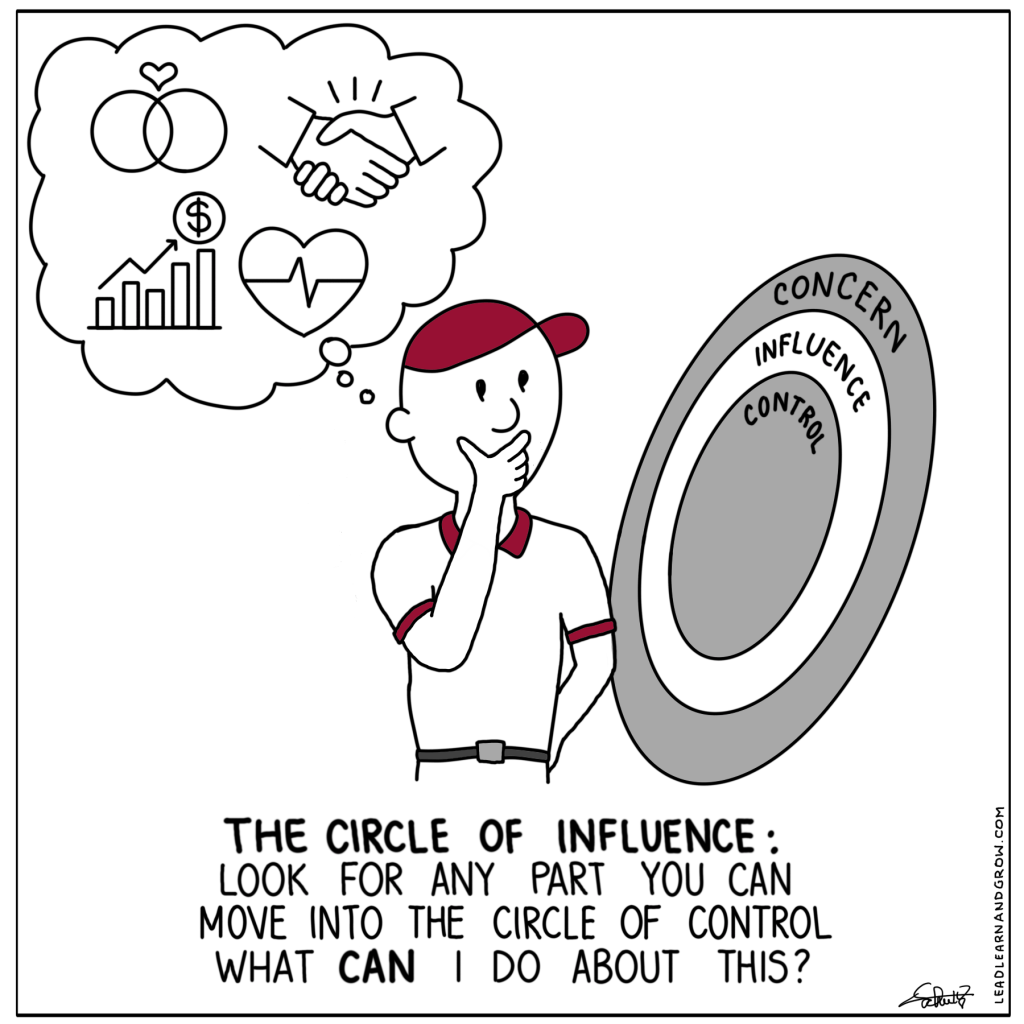
What about the circle on influence? What should we do about that? Well, for any item that is inside the circle of influence – meaning that we have some influence on it but not complete control – we simply ask, “What part of this is within my circle of control? What CAN I do about it?”

Let’s look at a work-related example:

You have a boss who is very demanding, always correcting what you believe to be tiny details in your work that you think aren’t very important. You are frustrated by your boss and consider him to be too picky. He should lighten up!

It may not feel like it, but your boss and his actions are within your circle of influence. Simply focus on what you CAN do about the situation. Remember the three things that are wholly within your circle of control: your focus, your interpretation, and your action.

  • Your focus – you can choose to either focus on what your boss is saying to you and try to learn from it, or you can choose to “tune him out” and ignore his corrections. The choice is up to you what to focus on.
  • Your interpretation – you may initially interpret your boss’ actions as demanding, overly-detailed and picky. But if you try hard enough and look at things from his point of view, you might see the situation differently. Maybe there is a reason that these details are important, a reason that you don’t yet realize. The choice of how you interpret the situation is up to you.
  • Your actions – you have a choice whether to take your boss’ feedback and give more attention to the details of your work. You could also choose to speak with your boss and ask him to explain the importance of the details, so you understand the impact of your mistakes. You could also choose to quit, if you decide it isn’t worth your effort to change yourself. Quitting may have consequences, but it is a choice that is fully in your own control.

When you look at it this way, focusing on what you CAN do rather than what you CAN NOT do, is incredibly powerful. In every single situation in life, you CAN choose your focus, interpretation and action. And this allows you to truly lead yourself, because realizing that you CAN do something lets you move from feeling powerless to being powerful.

One more look at the circle of concern, the group of things over which we have no influence or control. Is this circle completely useless? Is there anything we can do with it? Thankfully, the circle of concern has some value. We can do one of four things with something that rests in the circle of concern:

  • We can look for some way to change it – or to change ourselves – nudging it from the circle of concern to the circle of influence.
  • We can accept it and learn to live with it
  • We can leave it – if it really is so bad, maybe we need to walk away
  • We can learn from it – especially things that happened in the past, what lessons can we learn and apply to the future?

Here is an easy exercise you can practice this week to strengthen your ability to lead yourself:

  • As you encounter difficult or frustrating situations and find yourself saying (or thinking) that you CAN’T do this, or CAN’T do that, pause for a minute and change your words: instead of saying what you CAN NOT do, trying saying what you CAN do. Or, at the very least, what you MIGHT be able to try doing.
  • Set an alarm bell in your mind that rings every time the word “CAN’T” crosses your mind or your tongue. By shifting your vocabulary from CAN’T to CAN, you will focus on your circle on control and lead yourself more effectively.

In the next chapter, we will continue exploring ways you can lead yourself and introduce the concept of practicing emotional intelligence.

As always, we welcome your input and feedback: leave your comments below or drop us a message. And please follow me on Instagram: @leadlearnandgrow

Chapter 4 – Building resilience

This is the fourth section of my virtual book, “On Leadership“.

In the previous chapter, we explained what it means to lead yourself. We shared four skills you can develop to lead yourself more effectively. In this chapter, we will focus on the second of those four skills: building resilience and cultivating a “growth mindset”.

Let’s begin by defining resilience. Resilience is the ability to recover quickly from a setback. It is the “elasticity’ that lets you quickly spring back into shape when you stumble, fall or fail. As an English idiom goes, you need to get back up on the horse that knocked you off.

Schultz - resilience

What are some examples of when you might need resilience? In your personal life, you might receive a poor grade on a test or a paper, you might be rejected by a romantic partner or hurt by a friend, or you might struggle to learn a new language or master a new skill.

In your work life, you may receive feedback that your output doesn’t yet meet expectations, you may encounter interpersonal conflicts with colleagues, you may receive less of a raise than you expected, or you may be laid off in a corporate restructuring.

In all of these examples – as well as many more – resilience is important to develop.

Why is resilience an important skill to develop? Even the most successful people fail – sometimes much more often than they succeed! There is the story that Thomas Edison tried 1,000 variations on the incandescent light bulb before he landed on the successful formulation.

Michael Jordan, perhaps the greatest basketball player in history, is quoted as saying, “I’ve missed more than 9,000 shots in my career. I’ve lost almost 300 games. Twenty-six times I’ve been trusted to take the game-winning shot and missed. I’ve failed over and over and over again in my life. And that is why I succeed.”

The lesson here, is that even the most successful people fail and they may end up being successful because they develop resilience.

There is another reason resilience is important: the world is changing at an ever-faster pace. You will have to learn more new skills, more quickly, than did the generation before you. If you know you will have to learn a lot, you can expect that you will face many failures and setbacks along the way. The greater your resilience, the better you will be able to adapt and thrive in the ever-changing world.

What are some specific ways you can develop resilience? The most effective way to develop resilience is to cultivate a growth mindset. More about what that means in a moment. First, let’s consider this observation:

How you noticed this interesting tick of human behavior? When we are successful at something, we tend to credit our knowledge, skill or ability. And when we fail at something, we tend to find an external reason to blame: didn’t have enough time, the instructions were unclear, we didn’t have our coffee this morning, etc.. This is called “attribution bias” and because of it, we tend to try to explain away failure, rather than owning it and figuring out how to learn from it.
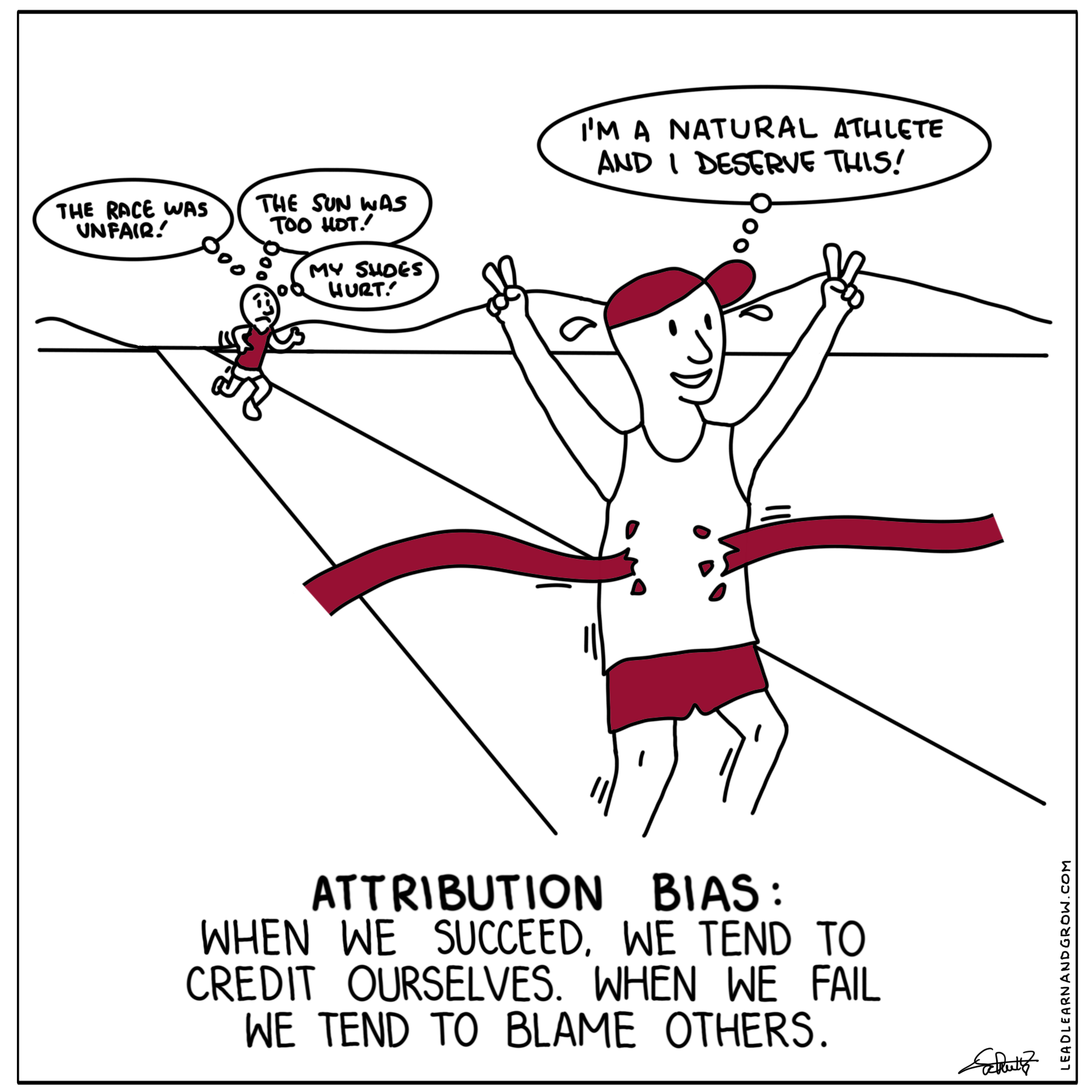
Schultz - attribution bias

To develop resilience, we have to do something very uncomfortable: we need to learn to embrace failure. That may sound crazy, but as we shared earlier, even the most successful people in their fields fail often. If you know that failure is inevitable, why not embrace it and learn from it?

The best way to do this is to cultivate a “growth mindset”. A mindset is a self-perception that people hold about themselves. Believing that you are either “intelligent” or “unintelligent”, “creative” or “not creative” are simple examples of mindsets.

People can be aware or unaware of their mindsets, which can have profound effects on learning achievement, personal relationships and professional success. Psychologist Carol Dweck did a lot of research looking at how people’s mindsets affect their achievement. She coined the terms “growth mindset” and its opposite, “fixed mindset”.

In a fixed mindset, people believe their basic qualities, like their intelligence or talent, are simply fixed traits. They believe that talent alone creates success – without effort. People with a fixed mindset (for example, the belief that I am “smart” or “dumb” and this cannot be changed) may learn less than they could and shy away from challenges.
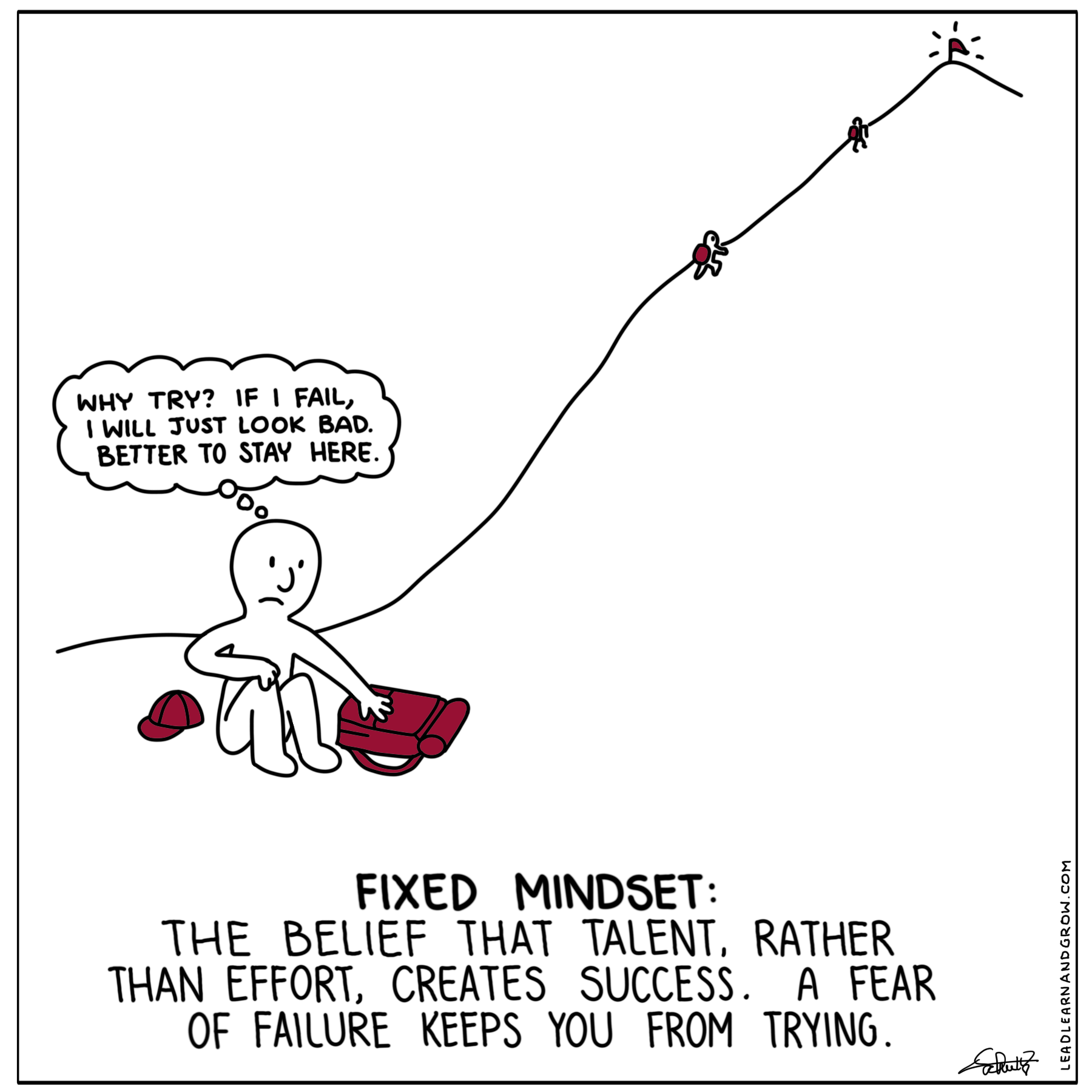
Schultz - fixed mindset

When people with fixed mindsets fail at something, they may tell themselves they can’t or won’t be able to do it or they make excuses to rationalize the failure. Sound familiar?

Here’s a quick example: consider someone playing a word or number game like a crossword puzzle or Sudoku. After finishing one of these puzzles, a person with a fixed mindset is likely to choose to do another that is at the same level of difficulty, because they know they can successfully complete that level of puzzle.

In a growth mindset, people believe that their most basic abilities can be developed through dedication and hard work—brains and talent are just the starting point. People who embrace growth mindsets (the belief that they can become better if they work hard and persevere) may learn more quickly and view challenges and failures as opportunities to improve their learning and skills.
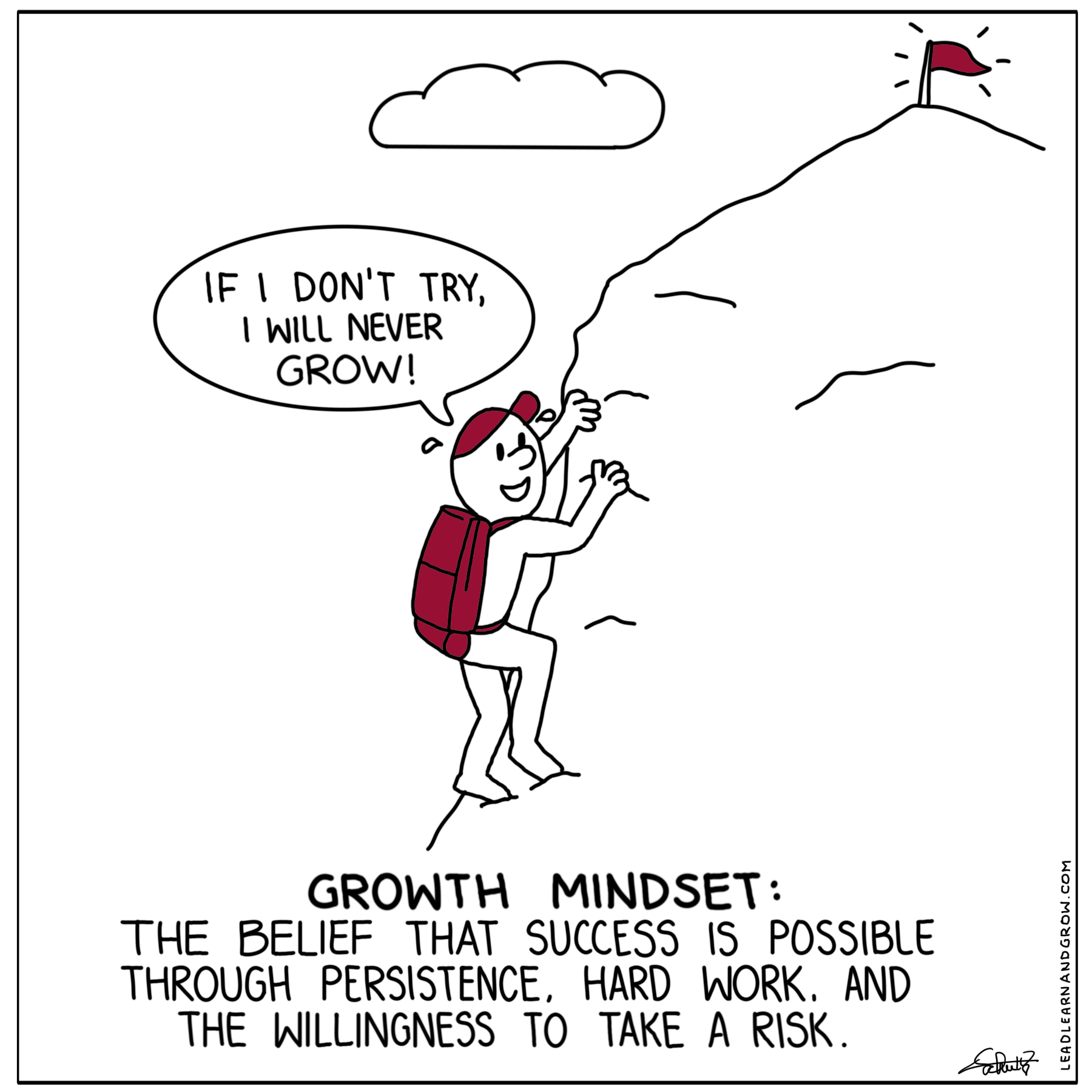
Schultz - growth mindset

When people with growth mindsets fail at something, they look at the failure as a lesson. They try to figure out what they could try differently and then actively apply what they learned to the next attempt.

Back to the Sudoku example, when completing a puzzle, someone with a growth mindset is likely to choose to attempt a puzzle of greater difficulty. They are excited by the challenge and seek to test – and push – their limits.
Schultz - yet

Here are four easy ways to cultivate a growth mindset and, by doing so, increase your resilience:

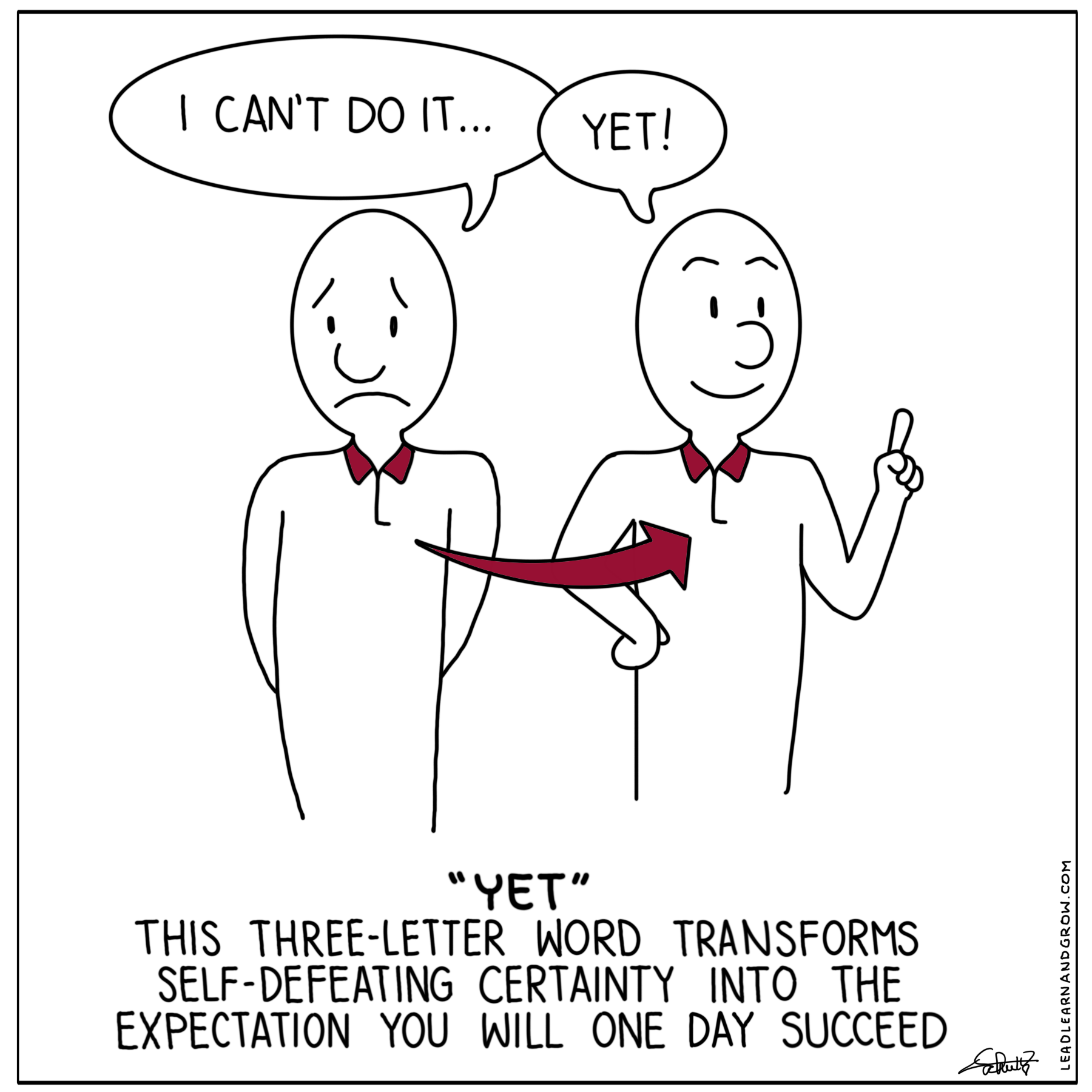
  • Add the word “yet” to your vocabulary. Notice the subtle difference between these two phrases: “I can’t speak in public” and “I can’t speak in public yet.” With the addition of a three-letter word, “yet”, you transform a self-defeating certainty into an expectation that you can one day achieve the goal. It may sound silly, but language dictates mindset. Try adding the word “yet” when you describe something you cannot do or are not comfortable doing and see how it changes you.
  • Expect to learn from every experience. We all agree that when you have not succeeded, there are obviously lessons you can learn. But even when you succeed, there are still lessons you can learn. If you look at every experience as a learning opportunity, it will matter less whether you succeed or fail – your goal is to learn and continue to improve. World-class athletes continue to look for ways to improve, even when they have won the game or set a new record. You, too, can seek to learn from every experience by asking yourself afterwards: “What did I do well?” and “How could I do better next time?”
  • Ask others about the lessons they learned the hard way. While you may think that your manager or other people in the organization are flawless and perfect (actually, you don’t really think that, do you?), they have made mistakes along the way like everyone else. Strike up a conversation with them and ask about the biggest lessons they have learned in their career – and ask whether the lessons more often came from success or from failures. These type of conversations increase trust and offer valuable insights that all of us are learning from failure.
  • Finally, take the long view: five, ten, or twenty years from now, will you remember this “failure”? Probably not – and if you get back up and try again, you’ll likely remember this “failure” as the moment that inspired you to try again and succeed. The pain and frustration of failure fades quickly from our memories, and a hard-earned success tastes particularly sweet!

As you can see, there are very practical ways to practice strengthening your resilience. Your exercise for this chapter: choose one of those actions and practice it throughout the week. Reflect on how your practice goes and, remember, you will learn from the setbacks and failures as well as from the successes.

In the next chapter,we will look at the “lead yourself” skill of focusing on what you can do rather than what you cannot do.

As always, we welcome your input and feedback: leave your comments below or drop us a message. And please follow me on Instagram: @leadlearnandgrow

Chapter 3 – Leading yourself

This is the third section of my virtual book, “On Leadership“.

In the previous chapter, we introduced the idea that before you can lead others, you must lead yourself. And before you can lead yourself, you need to know yourself. In this chapter, we will look more at what it means to lead yourself, why it is important, and introduce some ways to lead yourself that we will discuss in upcoming chapters.

Every leader is also a follower. All managers have their own managers, after all, so they have to play the role of a follower of someone else, in addition to being a manager – and, hopefully, also a leader – of their own direct reports. Being a good follower means showing leadership over yourself: your thoughts, your feelings, and your actions.

Being a good followerConsider this: have you ever, as a manager, thought about one of your employees and wondered, “Why don’t they just do…!?”

“Why don’t they just take responsibility? Why don’t they just follow up on what I told them to do? Why don’t they bring me solutions rather than complaining all the time? Why don’t they try and fix problems themselves instead of ask questions they know the answer to?”

If you say (or think!) those things about your employees, have you ever stopped and wondered what your manager wishes you “just did”? As much as you probably think you are an above average employee, there are doubtlessly things your manager wishes you did – or didn’t do! – that would make you even better.

Basically, leading yourself is about putting your words into action and being a responsible employee. By doing so, you will be a good example to others, especially to your direct reports. “This is the type of behavior I expect of you,” it says, “because I first expect this behavior of myself.” What’s important here is that you don’t lead yourself for the purpose of being a great example. That’s just a side benefit.

Schultz Leading Yourself

The deeper benefit of leading yourself is that it is about acting in a way that is consistent with your stated values. You may have heard the expression, “Do as I say, not as I do.” Well, leading yourself is about making sure you do as you say and as you do. Words and actions must align.

For example, if you say that treating people with respect is important to you, do you consciously treat people with respect – especially when it might not be easy to do, such as when you are frustrated with them or under stress? As another example, if you say that you value employees taking initiative, do you practice taking initiative yourself, or do you just wait for your manager to tell you what to do?

Besides the obvious benefit of being a good example for others (and people really want to work for a manager whose words and actions align – so it should be easier to attract people to your team and keep them longer), there are two other benefits of leading yourself effectively:

  • Leading yourself effectively improves your mental well-being. You simply feel better when you are taking charge of your thoughts, feelings, and actions in a constructive way. People who complain all the time, who only see obstacles instead of opportunities, and who spend their energy making excuses rather than delivering results, usually don’t feel very satisfied and fulfilled. Leading yourself will leave you feeling more satisfied and fulfilled.
  • And beyond this, the actions that are part of leading yourself will make you a much more attractive employee. Companies and managers value employees who lead themselves well. Demonstrating these behaviors will prepare you for more responsibility and future promotions. Leading yourself is good for your career.

How can you lead yourself? You might think back to what you expect from your employees, that “why don’t they just…” list. Those thoughts, feelings, and actions that you wish your own employees demonstrated are probably good indicators of what leading oneself looks like.

Here are four skills to help you lead yourself. We will talk more about them coming chapters.

  • Self reflect – the basic skill of leading oneself is the ability to self-reflect. We introduced this skill in chapter two (“Knowing yourself”) and you will see it come up again and again in future chapters
  • Build resilience – one of the most important skills we can develop to lead ourselves is resilience. When life knocks us down, how do we quickly get back up again? We will discuss this in the next chapter
  • Focus on what you can do – you can empower yourself by focusing your time, attention and energy on what you can do rather than what you cannot do. We will discuss this two chapters from now
  • Deepen your emotional intelligence – increase your awareness of your emotions and what you can learn from them, and develop ways to constructively express those emotions. We will discuss this three chapters from now.

For now, start by thinking about what “leading yourself” might mean for you and how you might practice the four skills listed above in your life – both at work and even outside work. Find one or two simple ways to begin practicing “leading yourself” and be aware of how these practices help you, and also what challenges you face when trying to lead yourself.

As always, we welcome your input and feedback: leave your comments below or drop us a message. And please follow me on Instagram: @leadlearnandgrow

Chapter 2 – Knowing yourself

This is the second chapter in my virtual book, “On Leadership“.

This chapter is about building your leadership ability. In the previous chapter, we introduced the difference between managing and leading. You will recall that managing is a business skill and leading is a human skill. If you are going to be a leader, who is the first person you need to lead? Of course, the answer is, yourself!

This may sound odd. After all, we usually think a leader leads other people. That is true, but the first person a leader leads, is him or herself. In order to lead yourself, you need to first know yourself.

What does it mean to know yourself and why is it important?

Each of us has different strengths and abilities. We also have different interests and values. We are most effective when we have a clear picture of who we are, what we value, what we are good at and what we enjoy doing. And, of course, we need to know the opposites, too: who we are not, what we do not value, what we are not particularly good at and what we do not enjoy doing.

Schultz self-reflection 1

Let’s look at two practical examples of this, one from outside the workplace and one from within the workplace:

John grew up in a peer group that was mostly from well-off families. While John’s family was modestly middle-class, he felt a lot of pressure from his peers to dress in the latest designer clothes, have the newest smartphone, and drive a fancy car. To have these things, he had to work very hard, missing birthdays and other special events of family members and friends. He also ended up taking on quite a bit of debt which he could not afford. Eventually, he worked himself into exhaustion and ended up in the hospital.

John’s aunt, someone who had treated him just as her own son when he was a boy, visited him in the hospital and asked why he was working so hard. At first, John did not have an answer. His aunt patiently asked about the many nice things he had and how he felt about having them. She asked without judgement, encouraging John to think about whether these material things were worth risking his health and missing out on spending time with his family and loved ones.

With his aunt’s gentle but powerful questions, John came to realize that all of these material things were not bringing him any happiness. And, in fact, they were causing him great suffering. He came to see that his actions were not aligned with his values: what he was doing (working to the point of exhaustion, missing special moments with loved ones, and digging himself into a deep hole of debt) were not fulfilling what was most important to him (health, spending time with loved ones, and enjoying the life he has). Realizing this allowed John to start making different decisions and, ultimately, to make choices that left him happier and more fulfilled.

The second example is from the workplace:

Anh graduated with honors in engineering and quickly found a job at a prestigious company. For the first year, Anh worked on individual assignments. She did not see how her work really made a difference and she had little interaction with her colleagues. Even though her parents were proud of her, Anh dreaded going into the office each morning and each afternoon, could not wait to leave. She wondered if this was what the next several decades of work would be like.

One day, Anh’s manager placed her on a short-term project working with team members from other departments to address a serious challenge that was affecting the company. Anh felt a new level of energy. She enjoyed learning about other parts of the company and how the project team’s work impacted the whole organization. Finally, it felt like she was doing something meaningful and she was not stuck working alone!

After the project was over, Anh’s manager asked what she had learned from the assignment. At first she hesitated to answer directly, but finally shared that she missed working with others and was energized by being part of something bigger. Her boss agreed that this was one of Anh’s strengths and said he would move her to work within a team. He also agreed to take more time explaining how her work related to the organization’s larger needs.

Self-reflection highlightThese two examples show how knowing yourself can help you feel more fulfilled and even happier in life, both inside and outside work. They are big-impact examples, but you can probably think of many everyday examples of how being more self-aware has helped you feel more fulfilled and happier.
What are some easy ways to get to know yourself better? There are many ways to deepen your self-awareness. The easiest is to set aside some time to consider the following questions. Write your answers and spend some time reflecting on what they tell you about yourself.

  1. What are the ten most important things to me in life? Rank them in order from most important to least important.
  2. What three words or short phrases best describe me?
  3. What is my biggest strength?
  4. What is my biggest weakness?
  5. What do I fear the most?
  6. What type of activities in the workplace make it feel like the time just flies by? Which activities give me the opposite feeling?
  7. What situations make me feel terrible, and what do they have in common?
  8. How do I prefer to interact with others?
  9. What motivates me to make progress?

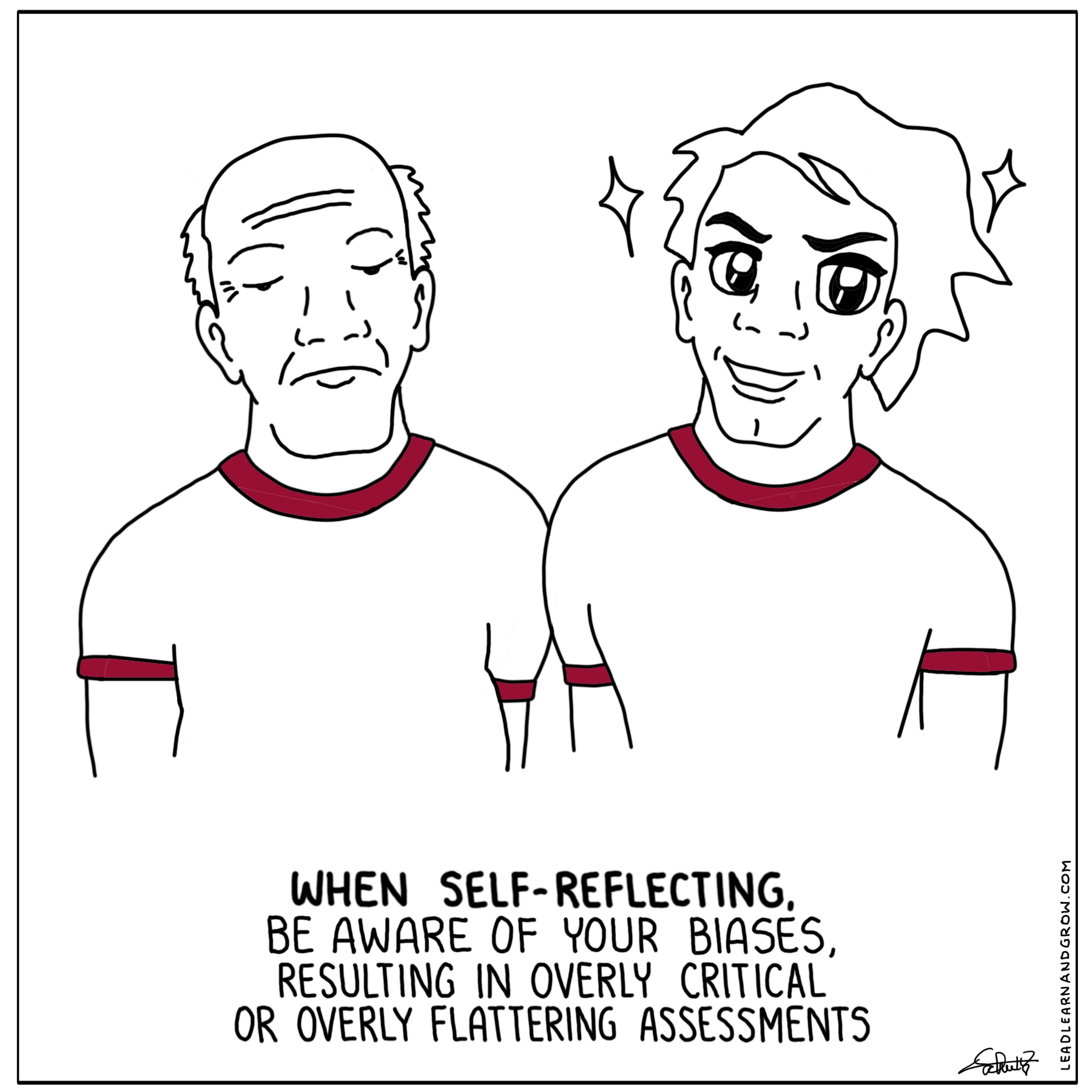
One warning: when self-reflecting, be aware of your biases. Some of us have a negative bias, resulting in us being overly self-critical. Others of us have a positive bias, resulting in a too-flattering self-portrait. And most of us have a bit of both biases, which can distort the picture. The easiest way to account for biases is to seek inputs from others, but even if you don’t feel comfortably doing that (yet!) please make every effort to assess yourself as accurately as possible.

Schultz self-reflection 2

Let me give you a quick example of how your answers to the above questions can deepen your self-awareness. One of my biggest strengths (question 3) is that I am very detail-oriented. Knowing this about myself means that I can be a great person to proofread documents, scrutinize implementation plans and critique written proposals. Those are the “pros” about this strength.

But I can also ask myself, when does this strength turn into a “con” or a liability? Sometimes I frustrate my colleagues by focusing on nit-picky details when all they are looking for is some general feedback. And sometimes I become so detail-oriented, that I risk missing important deadlines.

Knowing your strengths gives you insight into how to play to those strengths, but also how to watch out for “de-railers” or traits that can unexpectedly knock you off your path. This is true for all these self-awareness questions. Your answers to these questions will help you recognize some truths about yourself.

When we are working and living in a way that aligns with these truths, our life tends to go smoother. And when we are working and living in a way that goes against these truths, challenges arise.

Over the next week, set aside some time to do this self-awareness reflection. See what you can learn from it and start looking at how your life aligns or conflicts with your truth.

Interested to further increase your self-awareness? Here are four ways:

  • Ask people who know you to answer the questions above about you, from their perspective. For example, ask a trusted colleague, a close friend and your spouse for their answers and then compare how you answered from your own perspective. Think about why they have a similar or a different perspective about you and what you can learn from this.
  • Discover your DISC profile. DISC is a communications preferences assessment and can be helpful in recognizing how you prefer to interact and communicate with others. The free assessment and report on the Tony Robbins website provides helpful information. There are many other website that offer free or low-cost DISC assessments, too.
  • Meditate or exercise regularly. These types of activities let you get in touch with your body, especially your breathing. They help you let go of what you are thinking and “tune in” to your deeper self.
  • Keep a written journal. Regular journaling, recording your activities, thoughts and feelings on a daily or weekly basis, helps you pause and reflect, recognize patterns and learn more about yourself.

As always, we welcome your input and feedback: leave your comments below or drop us a message.

Chapter 1 – Manager versus leader

The first chapter from my virtual book, “On Leadership

When discussing something, it helps to agree on a few terms and what they mean. This way, we have a shared understanding. This should reduce some confusion and potential misunderstanding.

Let’s look at two terms: “manager” and “leader”. These words (and their verbs, “managing” and “leading”) are often used interchangeably. But they are actually very different things and knowing the difference can unleash a lot of power for us.

Let’s explore the difference:

Manager is an official, assigned role. It is about delivering results. As a manager, you are responsible for results delivered through people, through a process, or through both. For example, you can be a sales manager, a project manager, or a general manager.

Leader is an unofficial, earned role. It is about inspiring people, giving them a sense of purpose, encouraging them to overcome challenges, helping them adapt to changes, fueling their motivation, and helping them grow and reach their full potential.

The paradox: you can be a manager who isn’t a leader and you can also be a leader who isn’t a manager! This is because managing is a business skill but leading is a people skill. There are plenty of people who have the title “manager” but who haven’t learned (yet!) how to lead others.

Why is this important to know?

Paradox 22If you are a manager, it is important to realize that having the title “manager” won’t be enough to ensure that you effectively lead your people. In addition to building the skills you need to manage effectively, you will also need to build the skills you need to lead effectively. If you do not realize these are different skills, you may become frustrated that you are a manager whose people do not help you achieve the results you are responsible for!
If you are not a manager, it is important to realize you can still be a leader. In fact, leadership is something that all of us can practice regardless of our seniority, experience or job title. Knowing this difference can help “remove the obstacles” in your mind, helping you achieve more and feel more satisfied with your work and with your life.

There are a few easy ways to start applying this knowledge about managing versus leading:

  • First, think a bit more about “managing” and “leading”: what are some other examples of how these two are similar and are different?
  • Second, think about how this concept applies to you: are you a manager? If so, how effectively are you also leading your people? If you are not a manager, how can you still practice leadership?
  • Finally, be more conscious of the words you use: try to use “manager” or “managing” when you are talking about the business skill and “leader” or “leading” when you are talking about the people skill. Using the right words helps you have the right mindset.

In this blog, we will look at both managing and leading. We will look at the difference between the two and will share easy-to-use tools that will help you become more effective both as a manager and as a leader.

As always, we welcome your input and feedback: leave your comments below or drop us a message.

Writing my first book “On Leadership”

This website started as an idea for a book, a book about management and leadership. After some considerable thought, I realized that before rushing into publishing a book, this website would be a way to explore ideas and gather feedback. Based on that, I could eventually write a book.

The first book is titled “On Leadership”.

To read more, click the “Book 1 – On Leadership” tab.

Mistaking under-managing for empowerment

One common weakness of managers is their inability to execute – an inability to get things done. Since a manager works through his or her team, getting things done is the only way to succeed as a manager. You can’t do it all yourself.

Surprisingly, this weakness affects even managers with many years of experience. But it is especially common with newer managers. This is because before becoming managers, they were used to getting things done by themselves as individual contributors. Getting things done through others is a lot more challenging.

When it comes to the inability to execute, there are two common causes: some managers over-manage (“micro-manage”) and others do the opposite – they under-manage.

Managing execution effectively is critical to your team’s success and, ultimately, to your success. The good news? You can learn to become effective at managing execution. Let’s look at how:

IMG_0819

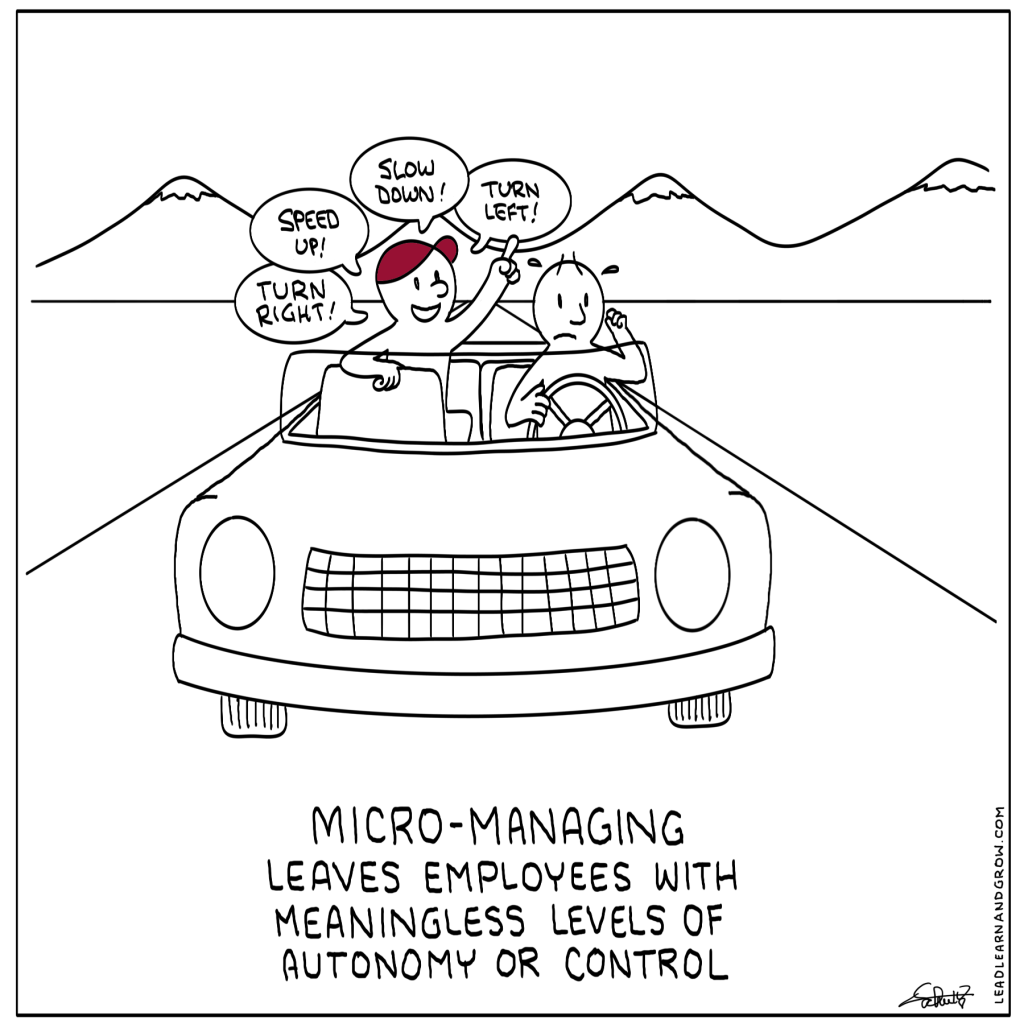
Micro-managing is essentially over-managing employees. This is when the manager leaves employees without any meaningful level of autonomy or control. The choices the employee makes are either just cosmetic or the manager will interfere with the choices after they are made.

This leaves the employee frustrated and disengaged. Worse, it wastes the talents of the employee. The manager is basically doing all of the important decision making. What a poor use of time and energy!

Why do managers micro-manage? The most common reason is that they don’t trust their employees to make decisions. They are not willing to take the risk that, sometimes, an employee will make the wrong decision.

The reason that micro-management leads to failure to execute, is that the manager is so involved in the details, that there isn’t enough time in the day to ensure everything is getting done. This is where the expression “Not seeing the forest for the trees” comes from. You are so busy with the details that you can’t see the big picture – and managing execution requires seeing the whole forest!

IMG_0820

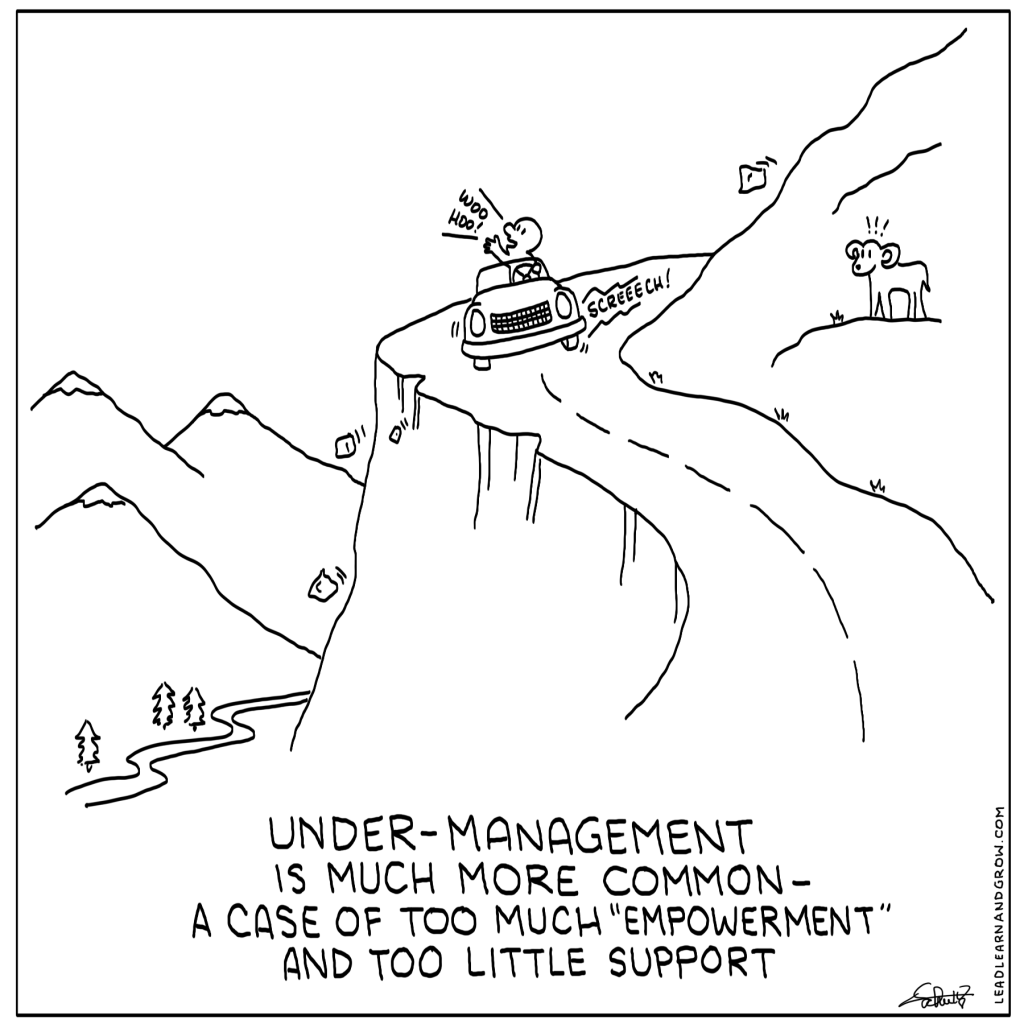
The other extreme is under-management. This is the most common reason for lack of execution. Essentially, it is giving the employee too much autonomy and decision-making freedom without the necessary support.

Unfortunately, this happens with the best of intentions – the manager believes he or she is “empowering” their employees. But empowerment is only part of the equation. You also have to consider whether the person is ready for the level of responsibility you give them. Empowerment without capability leads to failure.

Think about it this way: most countries have minimum ages to receive a driver’s license and you have to complete instruction and pass tests to show you are ready. When a manager empowers an employee, it needs to be the right level of empowerment for them with all the right capability and resources.

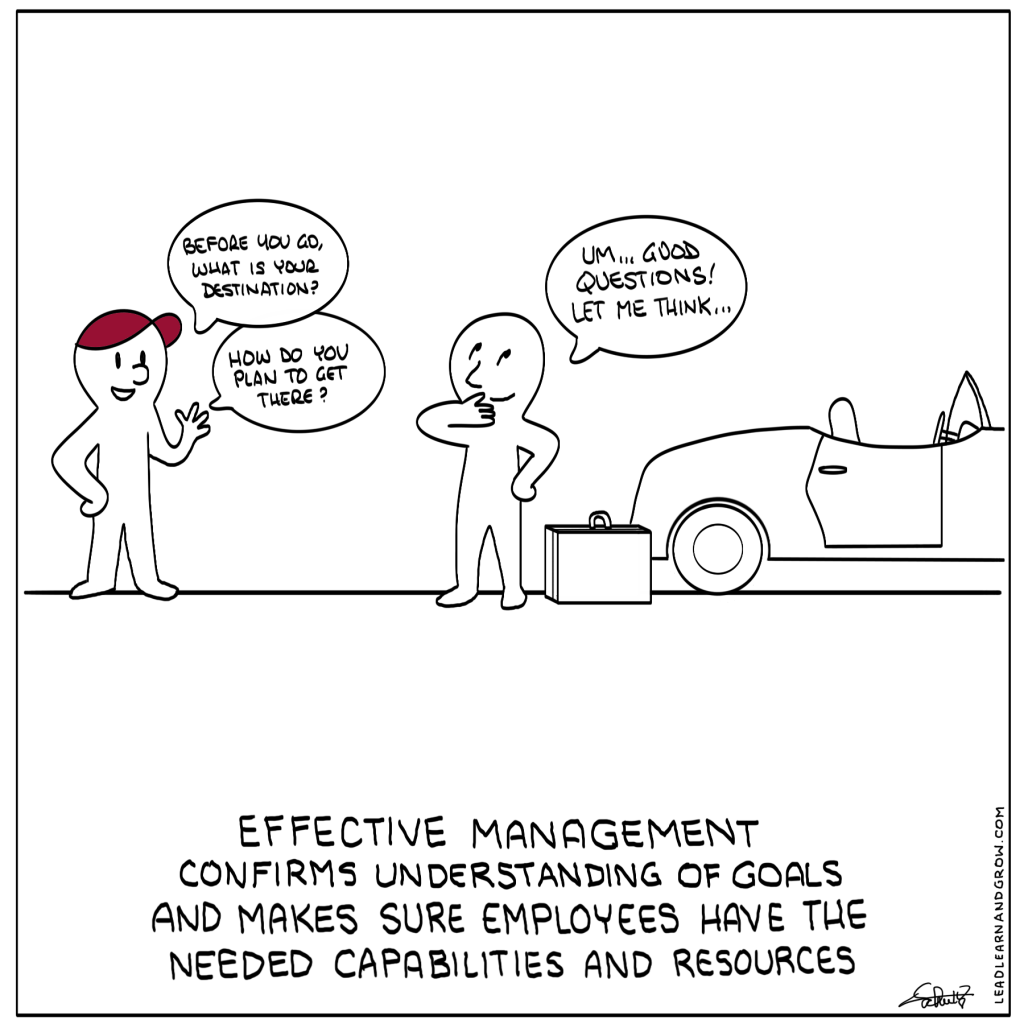
Under-management leaves employees unable to succeed. They may feel excited by the amount of freedom they are being given – but more often, they are worried, uncertain and frustrated because they aren’t sure where they are going and how to get there.

The reason under-management leads to inability to execute is that the manager is so focused on the forest that he or she forgets to zoom in and see the trees. When she finally does, at the end of the month, the quarter or the year, she is shocked to discover that the objectives have not been reached!

IMG_0821

So if over-management and under-management both lead to inability to execute, what is the right solution? Just like in the fairy tale Goldilocks and Three Bears, the middle approach – effective management – is the right one.

Effective management means you do four things:

  • Set clear objectives – when you set a goal or objective, describe it in clear detail (think SMART goals – specific, measurable, achievable, resources and time frame) and check that the employee understands exactly what your expectations are.
  • Make sure the employee has the capabilities and resources – ask how the employee is planning to achieve the objective and what resources he will need. You don’t need every detail – no micro-managing – but you do need confidence that he has a workable idea how to reach the objective.
  • Check progress early – before the employee gets too far on their journey, do a quick check to see what progress is being made. For example, if you give them a week to reach a deadline, check in quickly the following day just to see how they are doing. This way, you spot obstacles or confusion early – not on the day of the deadline.
  • Monitor progress regularly – for larger objectives and longer-term goals, set regular meetings to review progress. If there are obstacles, use the meeting to confirm that the employee knows how to overcome the obstacles. Do not let the meeting end without a plan and a high degree of confidence that the plan will be implemented.

With these four steps, you are providing the right balance of managing. If the employee has a clear understanding of the objectives, workable ideas to reach the objectives, and is making progress, you can manage a little less closely. If the employee is struggling or is less experienced in this area, you can manage a little more closely until he or she gets comfortable.

Of course, once the objective is reached, take the time to reflect with the employee: what did they learn? What went well? What would they do differently next time? And what could you do more effectively next time as their manager to help them?

By practicing effective management – and avoiding the extremes of micro-management and under-management – you will become much more effective at managing execution and getting things done through your people.

Let me know what you think – your comments and feedback are always welcome.

Learning for the next generation leader

P1050254

Leadership is slippery: it is based on simple principles but takes a lifetime to master. Young leaders – the next generation of leaders – know leadership is important. They can feel challenged, wondering how to learn to be a leader.

This blog is for the next generation of leaders (though, frankly, it is good for leaders of any age!). We designed this blog to help the next generation leaders learn how to be leaders in a practical, easy-to-apply way. We also designed this blog to help them not only be better leaders but also to grow as people.

We invite you to engage with us, share your own experiences and ideas and help us build the next generation of leaders.